
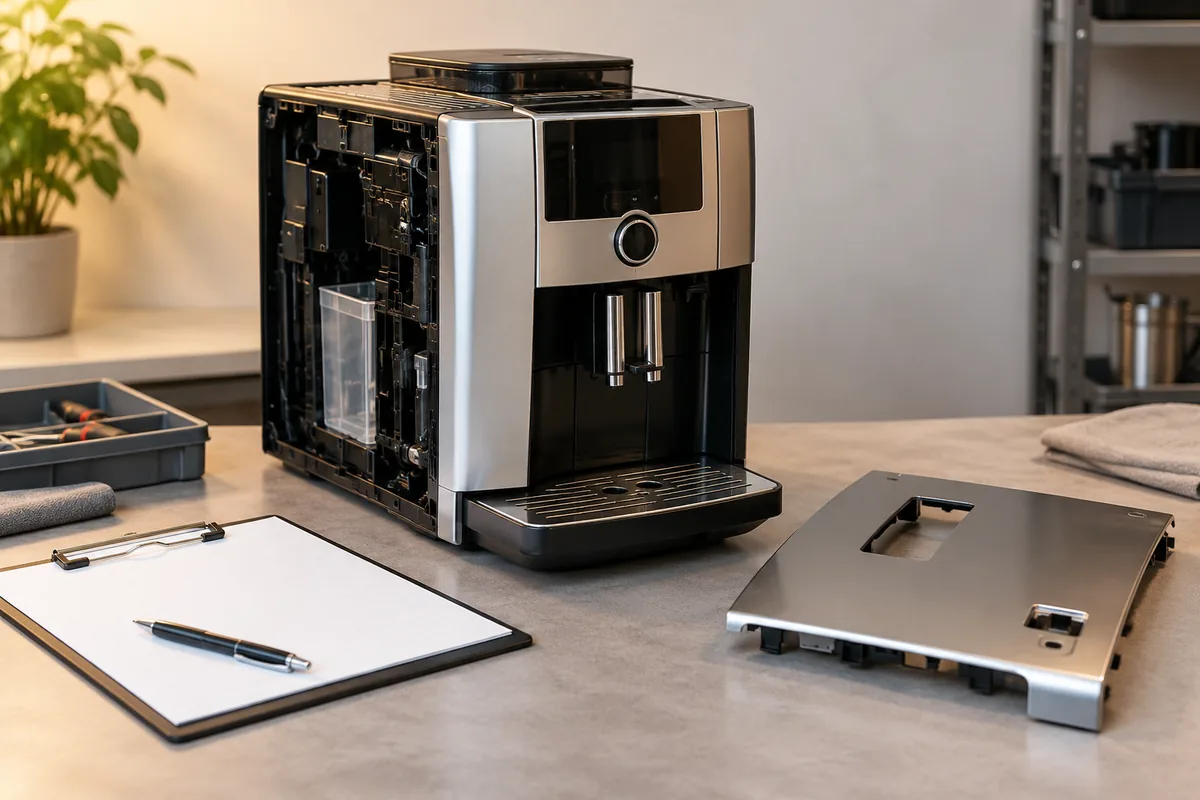
After repairs, a household appliance dispute often concerns what the service centre actually did and the condition in which the consumer received the appliance, rather than the initial fault. The claim that “the repair did not help” becomes verifiable when intake documents, a list of operations and a description of the recurring defect have been retained.
Link the documents to the particular appliance
Check the model, serial number and completeness against the purchase documents, intake receipt and return report. If a number is missing or differs in one document, establish why. Otherwise the technical records may not relate to the unit being examined.
What to request and keep
- The symptom reported on enquiry, with the date and conditions in which it occurred.
- The intake document recording external condition and accessories handed over.
- Diagnostic results and identifiers of replaced assemblies, if issued.
- The work order, completion report and software update information.
- The document recording return, checks and condition on handover.
- Correspondence about the repeat enquiry and unaltered original photos or videos.
A recurring symptom does not always have the same cause
For example, the same error message may appear with different faults or connection conditions. Record the error text, operating programme, load, connection, consumables and sequence of actions. Do not repeat a dangerous or destructive operating mode to obtain evidence.
What to avoid changing before inspection
Disassembly, cleaning traces and replacing parts yourself may hinder identification of the causes. If the appliance had to be disconnected for safety, record this. For a device containing data, separately agree how to preserve it: resets and updates may alter logs and settings relevant to the examination.
Removed parts lawfully held by the owner should be kept with information about their origin. An online photo of a similar assembly does not establish what was installed in this particular appliance.
How to define the specialist's task
Questions can be separated: is the reported defect present now, what signs indicate its cause, are the changes found connected to the described repair operations, and are the materials sufficient to answer? Assessing workmanship requires information about the work itself as well as inspection of the finished product.
If the repair history is incomplete, the specialist should state which conclusions can be drawn and which remain assumptions. Technical investigation helps establish facts; allocation of responsibility also depends on the contract, requirements and circumstances of the appliance's handover.